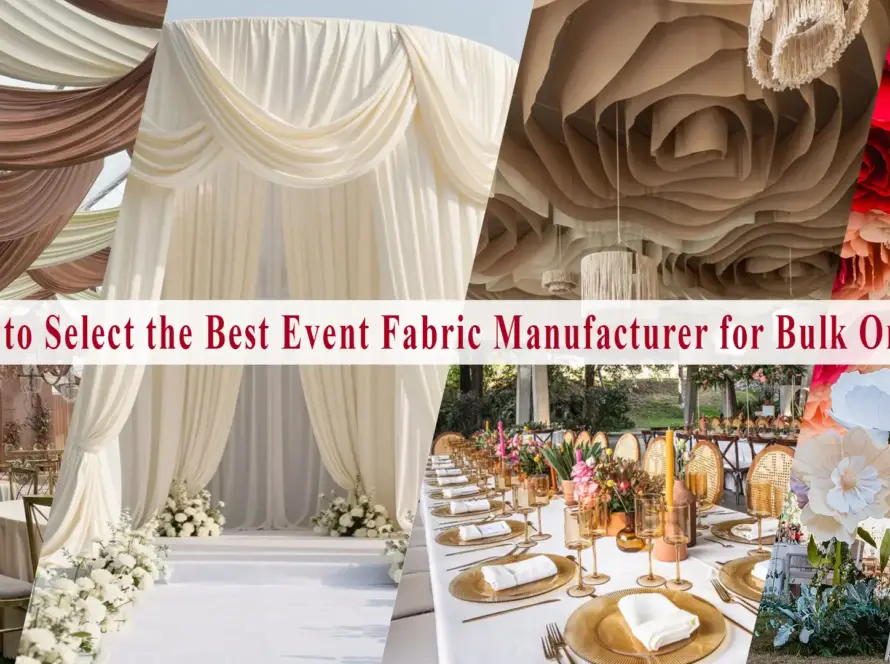
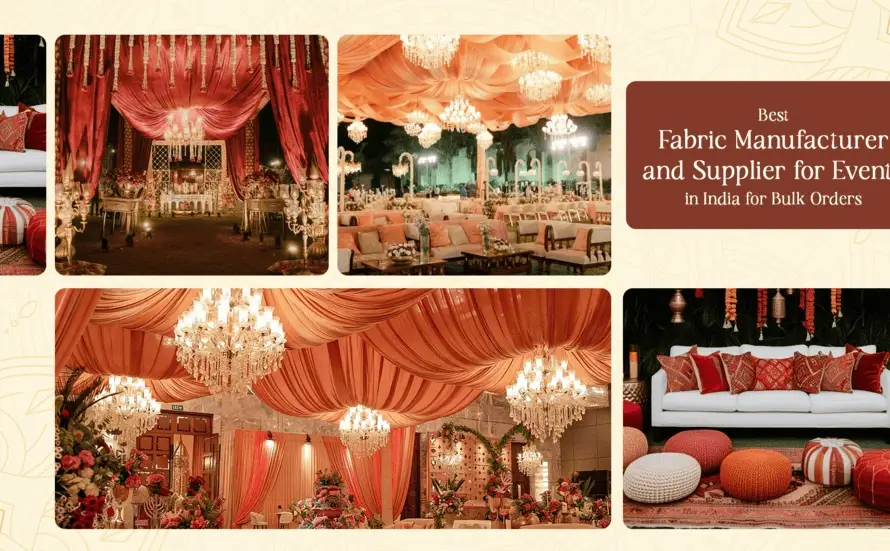
Introduction
Event agencies, exhibition companies, decorators, branding agencies, and hospitality businesses need fabrics that are visually appealing, technically suitable, and available in the required quantity. Choosing the right Fabric Manufacturer and Supplier for Events in India can simplify sourcing for backdrops, exhibition displays, stage setups, branded installations, drapes, and other commercial applications. A manufacturing partner can also support customized GSM, width, color, finish, printing, and bulk requirements. Businesses planning large purchases can refer to this bulk event fabric sourcing guide for additional procurement insights.
What Makes Event Fabric Different From Other Textile Products?
Event fabrics are selected according to their intended application rather than appearance alone. A backdrop, exhibition display, stage covering, decorative drape, or fitted display may require completely different textile characteristics.
Factors such as GSM, fabric width, composition, stretch, opacity, surface finish, color fastness, and printing compatibility can influence how the material performs after installation. Transportation and repeated handling may also need to be considered when fabrics are used across multiple events.
This application-focused approach is why event fabric manufacturers in India increasingly provide fabrics designed around commercial and project-specific requirements.
How Event Fabric Supports Different B2B Projects
Exhibition and Trade Show Displays
Exhibitions commonly use fabrics for booth walls, hanging displays, partitions, counters, graphic panels, and promotional structures. These applications require a clean surface, suitable weight, practical handling, and good printing performance where graphics are involved.
An exhibition fabric manufacturer can help businesses select or develop materials according to display dimensions, installation requirements, printing method, and expected usage.
Corporate Branding and Promotional Installations
Corporate events often depend on strong visual branding. Printed textiles can be used for stage backdrops, promotional walls, photo areas, product displays, and branded environments.
The base fabric plays an important role in the final appearance. Surface uniformity, print compatibility, color reproduction, and dimensional stability should therefore be considered before production.
Stage, Backdrop and Large-Format Applications
Large backdrops require careful consideration of width, weight, opacity, and drape. Wider fabric can reduce the number of visible joins, while the appropriate GSM can make installation and handling more manageable.
The correct construction depends on whether the material will hang freely, cover a frame, or be stretched across a structure.
Event Decoration and Hospitality Projects
Hotels, banquet venues, decorators, wedding planners, and event production companies use textiles for drapes, ceiling decoration, partitions, entrance structures, stage surroundings, and thematic installations.
Depending on the design, softness, texture, drape, color, opacity, and reusability may become important selection criteria.
Custom Fabric Specifications
Standard products may not always meet the requirements of a commercial project. Businesses may need a specific GSM, width, composition, stretch level, or surface construction. Custom manufacturing allows these requirements to be discussed before production, making it possible to develop a textile around the intended application where feasible.
Custom Colors and Finishes
Color consistency is particularly important for branded events and large installations. Corporate projects may require colors aligned with brand guidelines, while decorative projects may follow a particular event theme. The finish can also influence the fabric's appearance and handle. Therefore, color and finishing requirements should be finalized during sampling rather than after bulk production.
Custom Printed Event Fabric
Printed fabric can combine decoration with brand communication. Logos, campaign graphics, photographs, product visuals, and promotional messages can be incorporated into backdrops, exhibition walls, stage panels, and display structures. Printing performance depends on the relationship between the textile and printing technology. Discussing print requirements with the manufacturer helps ensure that the selected base fabric is suitable for the intended result. Businesses seeking customized options can explore Vmore Event Fabric solutions based on their project requirements.
GSM, Width and Fabric Weight
GSM indicates the weight of fabric per square metre and can affect drape, opacity, handling, and overall body. Width is especially important for large-format applications because it can influence cutting efficiency and the number of joins required. For B2B procurement, comparing only the price per metre can be misleading. The GSM and width should also be checked to ensure that different quotations represent comparable products.
Composition and Fabric Construction
Fibre composition influences strength, stretch, drape, surface feel, durability, and print performance. Polyester-based fabrics are commonly considered for several commercial event and display applications because of their versatility. Construction also determines how a textile behaves during installation, transportation, and repeated handling.
Surface Finish and Print Performance
A suitable surface finish can improve the appearance and functionality of an event textile. Printed applications generally require a consistent surface to achieve better graphic reproduction. Color fastness and dimensional stability are also worth considering, particularly when the fabric will be reused across different events. A professional Fabric Manufacturer and Supplier for Events in India can help buyers understand these specifications before production rather than treating every requirement as a standard fabric purchase.
From Fabric Production to Finished Event Material
- Fabric Manufacturing and Processing
Depending on the product, manufacturing can involve knitting or weaving followed by dyeing, printing, finishing, inspection, and packaging. Each stage can influence the final characteristics of the fabric.
Understanding this process helps B2B buyers communicate requirements more accurately and evaluate suppliers based on manufacturing capability.
- Dyeing and Color Development
Custom-colored fabrics require controlled shade development. An approved color reference or sample provides a useful benchmark before larger production quantities are manufactured.
This becomes especially important when several fabric rolls need to be installed together.
- Printing and Surface Customization
Printing transforms fabric into a branded visual medium. The suitable technology depends on the composition, construction, artwork, and intended application.
For exhibitions and corporate events, the objective is not simply to print an image but to achieve a finished textile that delivers the expected visual quality after installation.
- Finishing and Inspection
Finishing can influence handle, appearance, and dimensional behavior. Before dispatch, commercial orders may be checked against agreed specifications such as width, GSM, shade, surface quality, and print requirements.
This manufacturing approach helps support consistency from sampling through bulk production.
What B2B Buyers Should Know About Bulk Production
- Maintaining Consistency Across Large Quantities
- Sample-to-Bulk Production Matching
Sampling provides an opportunity to evaluate the actual textile before confirming the complete order. Once approved, the sample can become a reference for bulk manufacturing.
This is particularly useful for custom-colored, printed, or technically specified fabrics.
- Production Planning for Recurring Requirements
Event companies may require the same fabric repeatedly for different projects. Maintaining specifications and approval references can make repeat production easier and reduce unnecessary product development.
Lead time, production capacity, raw-material availability, and expected quantity should be discussed in advance when the requirement is connected to a fixed event date.
- Packaging and Dispatch
Commercial fabrics need suitable packaging for transportation and handling. Roll dimensions, quantity, packaging requirements, delivery location, and dispatch schedule should be confirmed before production is finalized.
For additional bulk-order considerations, businesses can also review event fabric bulk manufacturing guide.
How Fabric Selection Impacts Event Project Performance
- Fabric Weight and Installation
Fabric weight can influence handling, drape, tension, and installation. Lightweight materials may be appropriate for flowing decorative applications, whereas other structures may require greater body or stability.
The installation method should therefore be considered before selecting the textile.
- Surface Quality and Visual Presentation
Large event installations are highly visible, making surface consistency important. Uneven appearance, shade differences, or unsuitable finishing can affect the overall presentation of a booth, stage, backdrop, or venue.
Sample evaluation can help identify such issues before bulk production.
- Printing Quality and Brand Visibility
For branded installations, printing quality directly contributes to visual communication. Clear graphics, consistent colors, and suitable print definition can make promotional displays more effective.
The printing process and base textile should be evaluated together rather than independently.
- Durability and Reusability
Event materials may be folded, transported, installed, removed, and stored repeatedly. If reuse is part of the business model, fabric selection should account for expected handling and lifecycle requirements.
This can help event companies choose materials that are better aligned with their operational needs.
Cost Considerations for Custom and Bulk Event Fabric
- Fabric Specifications and Their Impact on Cost
Composition, GSM, width, construction, dyeing, finishing, and other technical requirements can influence pricing. Therefore, quotations should be compared against equivalent specifications. - Customization and Printing Costs
Special colors, custom widths, finishes, and printed designs can introduce additional processing costs. Providing complete requirements at the enquiry stage allows manufacturers to prepare a more meaningful quotation. - Quantity and Production Economics
Order quantity can affect production planning and commercial pricing. Businesses with recurring requirements should provide realistic quantity estimates and, where possible, forecast future demand. - Technical Specifications vs Price
The lowest metre rate does not always represent the lowest project cost. Poor print quality, unsuitable width, excessive wastage, inconsistent batches, or difficult installation can increase overall expenses.For B2B buyers, technical suitability and total project value are more meaningful than price alone.
What to Discuss With a Fabric Manufacturer Before Production
- Application and Required Quantity
Start by explaining where the fabric will be used and the approximate quantity required. This gives the manufacturer context for recommending an appropriate product.
- Fabric Specifications
Share known requirements such as GSM, width, composition, color, finish, stretch, opacity, and printing needs. If you are uncertain about technical specifications, explain the application so the manufacturer can guide the selection.
- Customization and Printing Requirements
For branded projects, discuss artwork, print method, color expectations, and finished dimensions before production begins. This reduces the risk of choosing an unsuitable base fabric.
- Delivery Timeline and Production Planning
Event projects usually work around fixed dates. Sampling, approval, manufacturing, finishing, packaging, and dispatch should therefore be included in the production schedule.
A reliable Fabric Manufacturer and Supplier for Events in India should be able to discuss these requirements clearly before accepting the order.
Why Indian Manufacturers Can Support Event Fabric Requirements
Textile Manufacturing Capabilities
India has an extensive textile ecosystem covering fibre, yarn, knitting, weaving, dyeing, printing, finishing, and fabric distribution. This creates opportunities for businesses to source fabrics according to different commercial requirements.
Custom Production Opportunities
Manufacturing-based sourcing can provide flexibility when businesses require specific widths, GSM, colors, finishes, or printing compatibility.
Bulk B2B Supply
Event agencies, exhibition companies, decorators, and branding businesses may require substantial quantities or recurring supply. Manufacturers with suitable production capabilities can support planned commercial requirements.
Domestic Sourcing and Coordination
For Indian businesses, domestic sourcing can simplify communication around samples, specifications, production schedules, and dispatch. This makes a Fabric Manufacturer and Supplier for Events in India a practical sourcing option for companies handling customized or recurring event projects.
Conclusion
Event fabric sourcing requires a balance between design, technical performance, manufacturing capability, and commercial practicality. GSM, width, composition, finishing, printing, durability, production consistency, and delivery planning can all influence the success of an event project.
Working with a Fabric Manufacturer and Supplier for Events in India can give exhibition companies, event agencies, decorators, branding businesses, and hospitality organizations greater flexibility for customized and bulk requirements. Instead of selecting fabric only on appearance or price, businesses can develop their procurement around the actual application and required performance.
Vmore Event Fabric provides a practical option for businesses looking for event textiles for exhibitions, branding installations, stage applications, decoration, and other commercial projects.
Frequently asked questions
The right fabric depends on the application, GSM, width, opacity, installation method, and printing requirement. Exhibition displays, stage backdrops, and decorative drapes may each require different constructions.
Yes. Depending on the product and manufacturing capability, specifications such as GSM, width, composition, color, finish, stretch, and printing compatibility can be customized.
Yes. Printed textiles can be developed for exhibition graphics, branded backdrops, promotional walls, stage panels, and other visual applications.
Provide the intended application, quantity, GSM, width, composition, color, finish, printing requirements, and required delivery date. These details help the manufacturer understand the project accurately.
Yes. When the same specification is required repeatedly, an approved sample and documented technical details can help maintain consistency between production batches.